Street Food Series
Korean Street Food Guide
The foods you see characters eating while walking through night markets in K-dramas. Simple, warm, unforgettable — all makeable at home with Walmart ingredients.
🇰🇷 포장마차 (Pojangmacha) Culture
Korean street food culture centres around the 포장마차 — the orange-tented street stall open until 2AM. It is where office workers go after overtime, couples take late-night walks, and K-drama characters have their most honest conversations. The food is cheap, warm, and always tastes better standing up in the cold.
Quick Comparison
| Snack | Sweet 🍯 | Texture ✨ |
|---|---|---|
| Korean Corn Dog (핫도그) Year-round (peak: winter markets) | 🍯🍯🍯🍯🍯 | ✨✨✨✨✨ |
| Hotteok (호떡) Winter (November–February) | 🍯🍯🍯🍯🍯 | ✨✨✨✨✨ |
| Gyeran Ppang (계란빵) Winter street markets | 🍯🍯🍯🍯🍯 | ✨✨✨✨✨ |
| Bingsu (빙수) Summer (June–September) | 🍯🍯🍯🍯🍯 | ✨✨✨✨✨ |

Korean Corn Dog (핫도그)
Instagram bait — the mozzarella pull is everything
Sweetness
Texture
Time
⏱ 30 min
Season
📅 Year-round (peak: winter markets)
Origin
US corn dog evolved into Korean street art — mozzarella filling since the 1990s, went global 2020
K-Drama Scene
Goblin and CLOY both feature characters walking through night markets eating corn dogs. The mozzarella cheese pull is a K-drama staple visual.
🇰🇷 K-Culture Tip
Korean corn dogs evolved from the American original by adding mozzarella, ramen noodle coating, and a sugar dusting to become something entirely different. The 'cheese pull' moment became one of Korean street food's defining social media shots — a whole genre of Instagram and TikTok content exists purely to capture the perfect stretch.
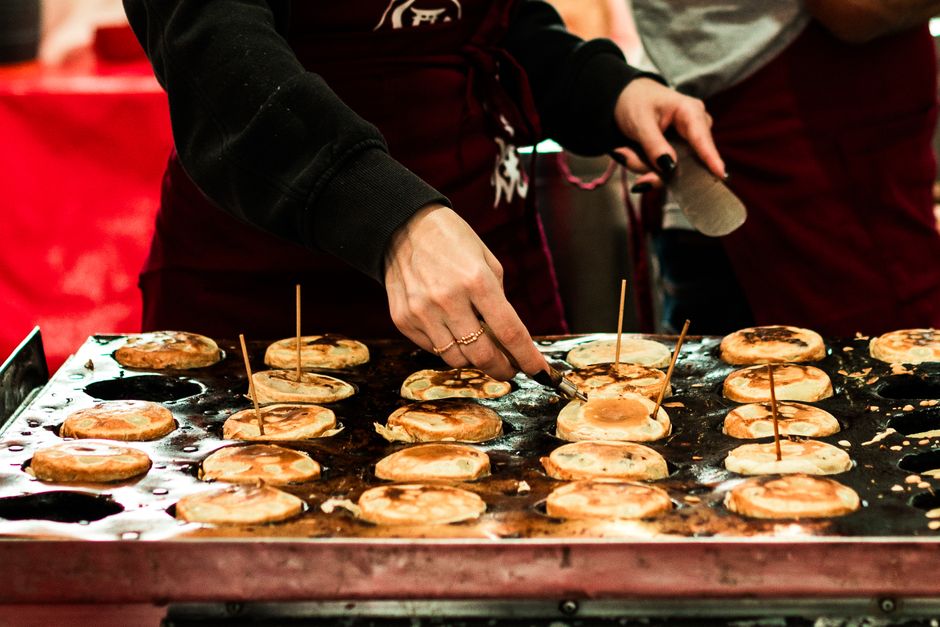
Hotteok (호떡)
Winter market magic — brown sugar lava in a pancake
Sweetness
Texture
Time
⏱ 40 min
Season
📅 Winter (November–February)
Origin
Brought by Chinese immigrants in the 1880s; became Korea's most beloved winter street food
K-Drama Scene
Used in K-dramas as the classic "cold winter date" food — characters cup both hands around a hot hotteok to warm up, often a romantic moment.
🇰🇷 K-Culture Tip
호떡 was introduced to Korea by Chinese merchants in the late 19th century and evolved into something distinctly Korean. The cinnamon-sugar filled winter version has become one of the defining smells of a Korean winter — vendors near palaces and markets like Insadong sell out daily. Many Koreans say they cannot eat hotteok without thinking of their grandparents.
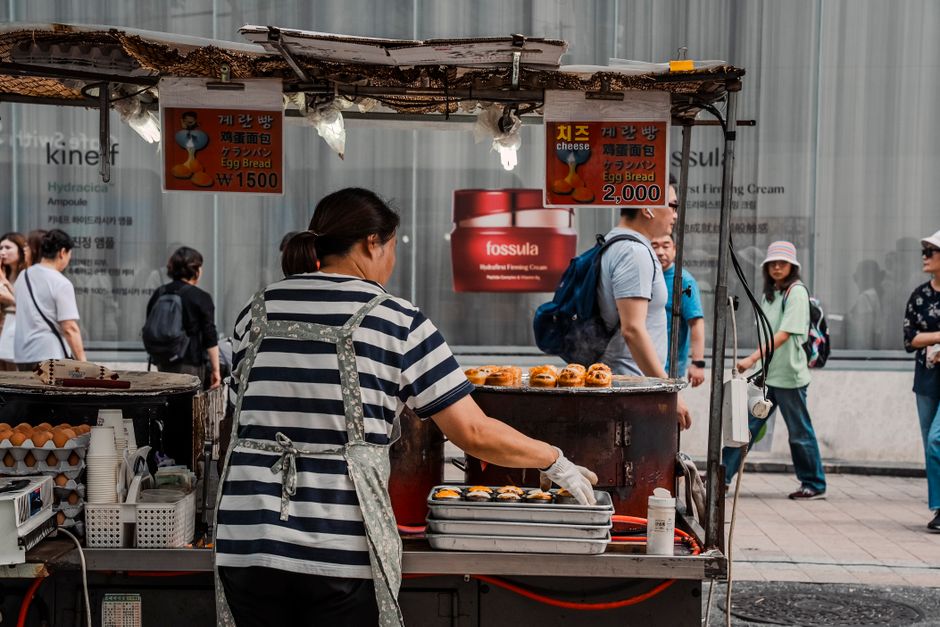
Gyeran Ppang (계란빵)
Soft, warm, honest — the humble winter staple
Sweetness
Texture
Time
⏱ 15 min
Season
📅 Winter street markets
Origin
Classic Korean street market bread — whole egg baked into a sweet bun, sold for 500 won (~$0.40)
K-Drama Scene
Lovely Runner — Sol gives Sun-jae gyeran ppang from a street stall in an early episode, a small gesture that anchors the entire emotional arc of the show.
🇰🇷 K-Culture Tip
계란빵 has been a fixture at Korean street markets and school-gate vendors since the 1990s. The sweet batter with a whole egg baked inside is designed to be eaten standing up, wrapped in paper, in the cold. Lovely Runner's time-travel premise means street food like 계란빵 carries extra nostalgic weight — it's the same snack across decades.
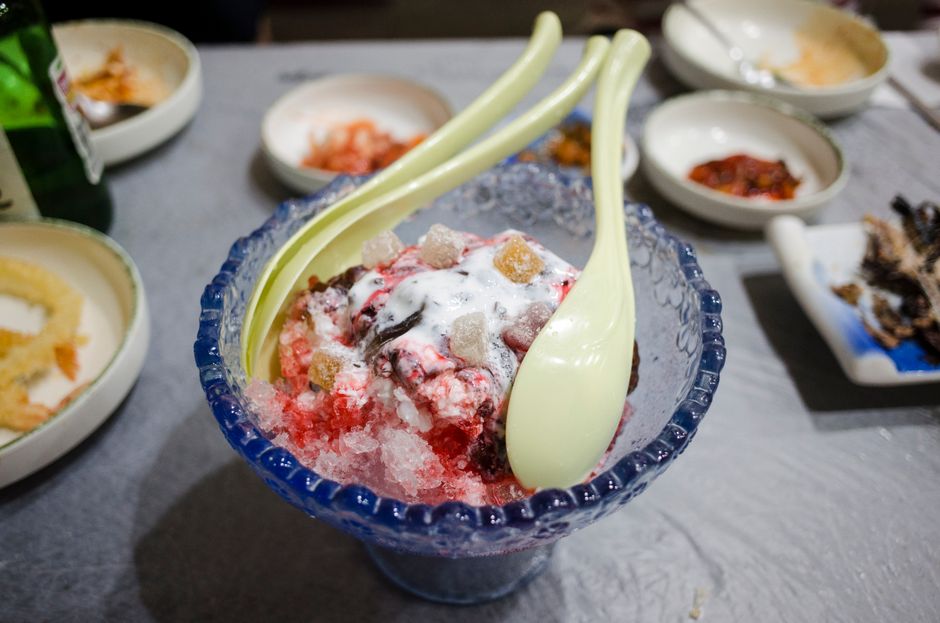
Bingsu (빙수)
Summer luxury — Korea's most photogenic dessert
Sweetness
Texture
Time
⏱ 15 min
Season
📅 Summer (June–September)
Origin
Royal court origins in Joseon Dynasty (19th century); evolved into the elaborate café dessert of modern Korea
K-Drama Scene
Hospital Playlist and Start-Up both feature the "sharing bingsu" scene — two people eating from the same giant bowl as a soft romantic moment.
🇰🇷 K-Culture Tip
빙수 has a 1,000-year history — the earliest records from the Joseon Dynasty show nobility eating crushed ice with honey. Modern café bingsu became a luxury item in the 2010s, with premium versions costing ₩15,000–30,000 ($11–22 USD). The contrast between humble street-stall origins and high-end café culture is distinctly Korean.
More K-food guides